.svg)
What We Fund
The DIV Fund is an R&D engine for development, supporting innovative solutions with the potential to cost-effectively improve millions of lives.
We combine risk-tolerant capital with evidence-driven decision-making to back bold ideas, identify what works, and scale the most cost-effective innovations. Our portfolio approach balances experimentation with evidence, while our tiered funding model right-sizes risk.
Before applying, please review our Request For Proposals.
Our Funding Stages
The DIV Fund offers three stages of grants. Across all stages, we prioritize investments that maximize expected social returns. To assess this, we consider key drivers of social returns in our reviews, such as unit costs, per-person impact, and crucially, scaling potential, including the probability of greater scale as a result of DIV Fund investment.
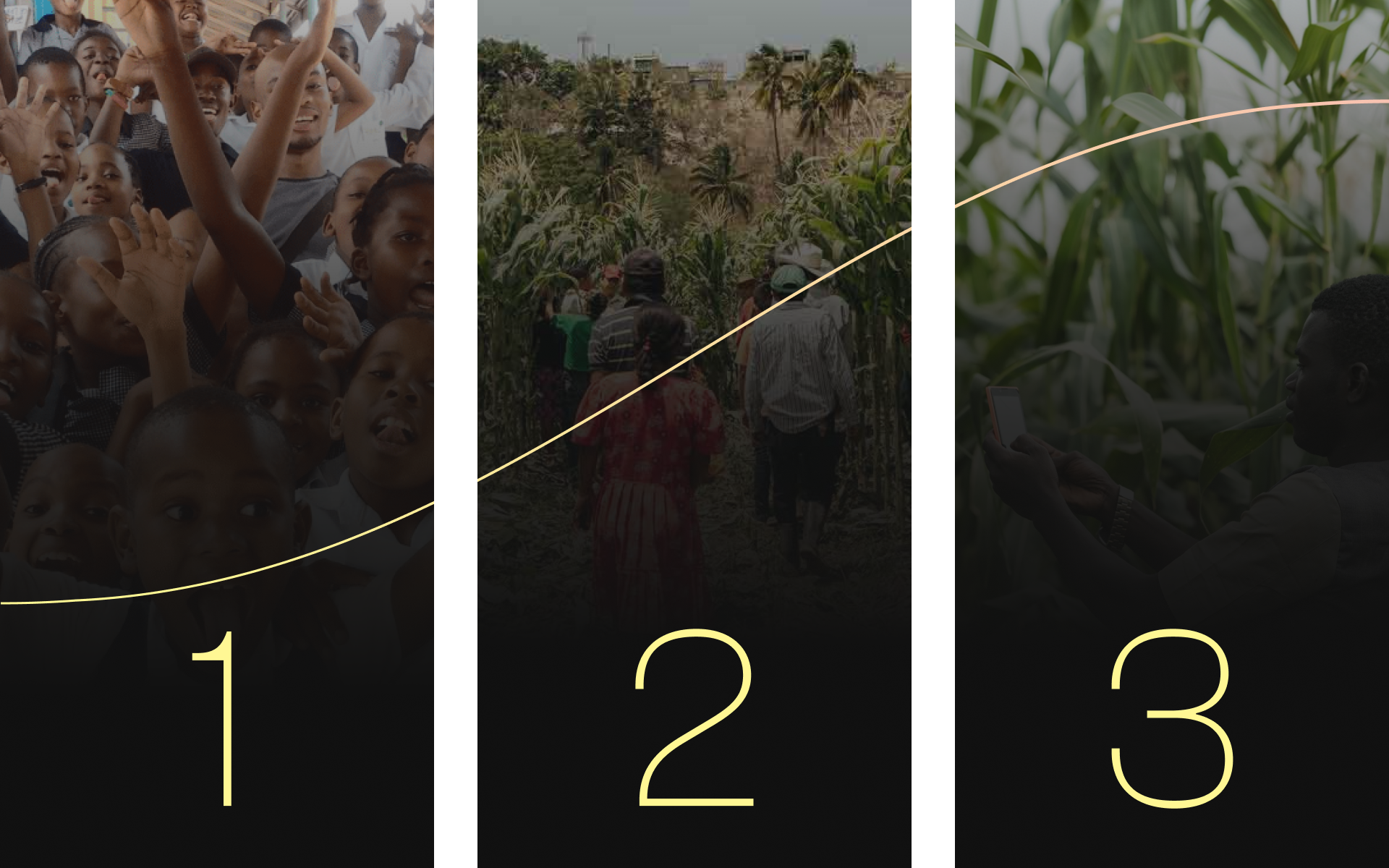
Pilot
Stage 1 grants support real-world pilots of promising innovations. These grants can be used to conduct testing to understand user demand, feasibility, impact potential, and financial viability.
By the end of Stage 1, we want to know whether the innovation works in practice, if people will use it, and if it shows enough promise to warrant deeper investment.

Test & Position for Scale
Stage 2 grants are used to determine if an innovation is measurably impactful and has a viable path for growth. These grants may include rigorous impact evaluations, market validation, testing new business models, or evaluating scale readiness through strategic expansions. By the end of Stage 2, we want to know if the innovation significantly improves lives, is cost-effective, and has a clear model for scaling.
*Most Stage 2 grants will be under $500,000. In especially compelling cases, we may consider Stage 2 grants of up to $750,000.

Scale
Stage 3 grants accelerate the scale-up of validated, transformative innovations. To receive this funding, grantees need to demonstrate strong evidence of impact and cost-effectiveness, or commercial viability, and leverage external partnerships to drive widespread adoption.
By the end of Stage 3, we want to know that the innovation can achieve sustained impact at scale without ongoing grant dependence.

Our Core Criteria
We assess every application against our three core principles: evidence of impact, cost-effectiveness, and potential for scale. What we look for under each principle is adjusted to each funding stage, from testing potential at earlier stages to demonstrating evidence of impact and readiness for scale at later stages.
We rely on rigorous evidence that an innovation improves lives, and at earlier stages, we help grantees build it. All applicants must present a credible theory of change grounded in available evidence.
We look for innovations with the potential to deliver greater impact per dollar than existing alternatives, by lowering costs, increasing impact, or both.
We fund innovations with the potential to generate impact for over 1 million people at scale, and that have a clear path to lasting financial sustainability.
We are open to any viable path to scale, be that through government or philanthropic funding, private markets, or a blend of funding sources. Your path shapes how we evaluate your application.
How to Apply
Below is an overview of what applicants can expect when they submit a proposal to the DIV Fund. For additional information, please refer to our Applicant FAQs.
Read the Request for ProposalS
Before applying, please review our Request for Proposals in full.
The Request for Proposals explains what we fund, how we evaluate proposals, and what we expect from applications for Stage 1, Stage 2, and Stage 3 funding across different pathways to scale.
Submit YOUR Application
The DIV Fund accepts applications on a rolling basis throughout the year. All applicants submit an application, which allows us to understand your innovation’s potential and fit against our funding criteria.
All applications must be submitted through our online portal. If your innovation advances past the initial review stage, more detailed materials (e.g., study designs, project budgets, partnership letters) will be requested during our full diligence process.
Application Review
Upon submission, eligible applications are reviewed against our core criteria as defined in our Request for Proposals, calibrated to the stage of funding requested. At this point, we are assessing overall fit with the DIV Fund model, including:
- Strength of the core innovation
- Potential for scale and long-term financial sustainability
- Expected impact, including the strength of existing evidence and the expected value of new findings that would be generated through the proposed award
- Expected cost-effectiveness and value for money
- Capacity of the team and key partners
- Strength of the team
Promising applications advance to the due diligence stage.
We aim to review every application carefully. However, we reserve the right to decline proposals without comment if they are incomplete or ineligible, or if they appear to be duplicative, primarily AI-generated, or not representing a legitimate applicant or activity. While we accept the thoughtful use of AI by applicants, proposals must reflect genuine human judgment, context-specific insight, and clear ownership of the ideas presented.
Diligence
Applications that advance into diligence enter a more detailed review phase. Diligence varies depending on the stage of the innovation and the complexity of the proposal. In general, during the diligence phase, our team works with applicants and engages external reviewers to:
- Better understand the innovation and its expected impact
- Assess risks and mitigation strategies
- Evaluate the strength, quality, and limitations of supporting evidence and the expected value of new findings
- Refine impact and cost-effectiveness assumptions
- Clarify the path to scale
The diligence process is designed to help us understand the expected social returns of a potential award, and the specific additionality of the DIV Fund’s potential support.
Decision Panel
Funding decisions are made by expert panels, convened several times per year. The panel reviews proposals and makes final funding determinations, which may include requirements to strengthen aspects of the proposal prior to funding.
Applicants are notified of preliminary funding decisions promptly following decision panels.
Pre-award
Successful applicants move into the pre-award stage, where we set up a milestones-based grant, in which funding is tied to achieving agreed-upon milestones. At the pre-award stage, financial due diligence is conducted, award milestones and budgets are finalized, and the relevant documentation and agreements are completed.
Submit an Application
Apply to the DIV Fund via our online application portal. To work offline before submitting, you may download the application form as a PDF or editable Microsoft Word file. Please note that all submissions must be made through our website to be considered.
Applicant FAQs
If you're considering applying for funding, take a look at the most frequently asked questions about the DIV Fund.
The DIV Fund accepts applications from most organization types, including nonprofits, social enterprises, startups, private-sector firms, universities and research institutions, technical assistance providers, and consortia working in low- and middle-income countries. We welcome applications from both locally-led and global organizations. Please note that we do not fund initiatives implemented exclusively in high-income countries, and we are unable to provide funding to individuals without a legally incorporated entity, or directly to government agencies.
We support innovations addressing challenges in low-income, lower-middle-income and upper-middle-income countries, in line with the World Bank’s income classification. See the World Bank classification here.
What we might fund:
Some examples of development innovations that the DIV Fund may support include the following:
- New technologies
- Policy innovations
- Social or behavioral innovations
- New business models, or new ways of delivering or financing goods or services
- Cost-effective adaptations to existing solutions
- Data collection and rigorous evaluation to measure the social impacts of promising innovations
- New ways of increasing uptake of highly effective solutions, including replication and scaling to new places
- Replication studies to confirm the results of prior impact evaluations and establish whether they generalize to other settings
What we typically do not fund:
There are some types of projects that are not a good fit for our objectives. These include but are not limited to the following:
- Innovations at the idea stage that have not yet been created (i.e., that are pre- prototype)
- Projects with limited potential to scale cost-effectively (e.g., construction of immobile physical infrastructure, such as schools, power plants, and factories)
- Basic scientific research (e.g., laboratory research of a prototype with no field testing)
- Planning, diagnostic, and other tools that are difficult to link directly to measurable development impacts and that reach millions of people only indirectly (e.g., a stand-alone monitoring or evaluation platform)
- Intermediaries with an indirect impact on development outcomes (e.g., incubators, accelerators, start-up boot camps, and other conveners)
- Innovations that are applicable only in very limited contexts that limit their ability to scale to a large number of people in need (e.g., projects that target a very rare disease)
- Research that provides evidence of impact but does not assess cost-effectiveness or scalability
- Innovations that primarily target high-income beneficiaries
Applicants should apply for the stage that best reflects the current state of the innovation and its readiness to generate stronger evidence and prepare for scale. While you don’t need to start at Stage 1, if applying for later stage awards, your application should credibly demonstrate that you have already met the criteria for earlier stages. All applicants should closely review the stage-wise criteria detailed in the Request for Proposals to make sure you’re applying for the appropriate funding stage. Our stage-wise criteria outline distinct requirements based on innovations’ proposed pathways to scale. As a summary:
- Stage 1 grants support real-world pilots of promising innovations. These grants can be used to conduct testing to understand user demand, feasibility, impact potential, and financial viability. By the end of Stage 1, we want to know whether the innovation works in practice, if people will use it, and if it shows enough promise to warrant deeper investment.
- Stage 2 grants are used to determine if an innovation is measurably impactful and has a viable path to scale. These grants often include rigorous impact evaluations, and may support market validation, testing new delivery models, or evaluating scale readiness through strategic expansions. By the end of Stage 2, we want to know if the innovation significantly improves people’s lives, is cost-effective, and has a viable scaling model.
- Stage 3 grants accelerate the scale-up of validated, cost-effective innovations. Grantees need to demonstrate strong evidence of impact and cost-effectiveness, or commercial viability, and leverage partnerships to drive widespread adoption. By the end of Stage 3, we want to know that the innovation can achieve sustained impact at scale.
Applicants should submit a proposal for the amount of funding required to achieve their proposed activities, which means the request does not need to reach the funding cap of each stage. The DIV Fund reserves the right to consider innovations for funding at a different stage or amount than the applicant has requested, which may be addressed during the diligence phase after the application is submitted.
No, applicants should apply directly to the stage that best reflects the current maturity of their innovation. Stage 1 funding is not a prerequisite for applying to Stage 2 or Stage 3 - the stages reflect levels of evidence and readiness for scale, not a required sequence of awards. We welcome applications at later stages for innovations that have met the criteria for preceding stages, with or without DIV Fund support.
Receiving funding at one stage does not impact an applicant’s chances of receiving subsequent awards and they will have to compete for any additional funding. All applications are evaluated independently based on their alignment with the DIV Fund’s criteria, including evidence of impact, cost-effectiveness, and potential for sustainability and scale. Applicants are welcome to apply again as their innovation evolves.
Across funding stages and innovation types, we look for proposals that cost-effectively deliver results and maximize social returns. To assess this, we consider key drivers of social returns, such as unit costs, per-person impact, and scaling potential, including the probability of greater scale as a result of DIV Fund investment. Alongside this framework, we look for proposals that can successfully answer questions like:
- Does the proposed innovation target a widespread problem that affects the lives of people in poverty?
- Is it likely this innovation will cost-effectively improve key development outcomes, relative to existing approaches, be that by reducing costs or increasing impact?
- Does the proposed approach demonstrate a strong practical understanding of local contexts as well as implementation realities?
- Does the applicant team demonstrate the expertise and relevant experience to execute it?
- Are the target users likely to adopt the solution?
- How likely is it to be taken up by the target payers-at-scale?
- Will DIV funding contribute to rigorously answering questions about the feasibility or cost-effectiveness of the innovation in improving key outcomes, or unlocking the path to scale?
Please review our Request for Proposals, which explicitly details our stage-wise requirements.
Yes! We have seen successful, high-impact innovations scale through public systems, philanthropic support, private markets, and combinations of funding sources. We are agnostic to innovations’ pathways to large-scale uptake, but we do assess proposals differently according to their anticipated payers-at-scale. Distinct criteria are detailed in our Request for Proposals.
We consider three broad pathways to scale:
- If the innovation is designed to scale through government, donor, or philanthropic funding, it will be considered as following a public pathway to scale.
- If the innovation is designed to scale as a business, financed by, for example, customer payments or advertising revenue, it will be considered as following a commercial pathway to scale.
- If the innovation is designed to scale through a combination of commercial revenue and public or philanthropic funding, it will be considered as following a hybrid pathway to scale. For “hybrid” applicants, we apply a blend of our public and private pathway review criteria, and applicants must demonstrate how they meet each relevant criterion.
We will assess whether the pathway you've selected is a realistic fit for your innovation's scaling strategy. Choosing the pathway that best reflects your innovation's true scaling model will make for a stronger application. For innovations scaling through a public pathway, we look for a credible case, calibrated to your stage of funding, that government and/or philanthropic partners would be willing to adopt and fund the innovation at scale. For innovations scaling through a commercial pathway, we look for a compelling case of market viability, again, depending on stage.
If your innovation is likely to need a long-term subsidy, then selecting a public or hybrid pathway gives you the opportunity to explain why that support is warranted and how you envision securing it from public or philanthropic partners in the long run. Selecting a pathway that genuinely reflects your model gives us the clearest picture of your work, and will strengthen, not limit, your application.
The DIV Fund uses a tiered approach that calibrates evidentiary requirements to an innovation’s current stage of development. Evidentiary requirements vary by stage and the proposed path to scale, and increase with the size of the funding request.
- Stage 1 applicants are not expected to have rigorous evidence of impact, but must present a credible theory of change and a plan to generate meaningful learning. At this stage, we look for high upside potential, and prioritize thoughtful, disciplined experimentation.
- Stage 2 applicants should have completed successful pilot testing and be ready to rigorously test impact or market viability. At this stage, evidence expectations depend on the pathway to scale: those pursuing public sector adoption must generate credible causal evidence during the award period if it does not already exist; those pursuing commercial scale must demonstrate a compelling case of market viability at application and a plan to validate it during the award.
- Stage 3 applicants must present, at the time of application, rigorous evidence of causal impact (for public scaling), and market viability consistent with Stage 2 criteria (for commercial scaling).
If strong evidence already exists for a substantially similar innovation, we will consider its relevance and merit as part of our assessment.
By cost-effectiveness, we mean the impact of an innovation relative to its cost, i.e., the innovation’s impact on an outcome of interest divided by the cost of implementing the innovation. For example, a literacy intervention's cost-effectiveness ratio would be calculated by dividing the per-student improvement in test scores attributable to the intervention by the total cost of achieving that improvement.
Cost-effectiveness is also inherently comparative. We are not asking whether your innovation is cost-effective in isolation, but how it performs relative to alternative approaches to achieving the same outcome. Strong applicants demonstrate a clear understanding of the landscape of alternative solutions and make a compelling, evidence-based case for why their innovation is likely to be more cost-effective. Where rigorous data are unavailable, particularly at early stages, we expect applicants to make the strongest possible case with available evidence, even if that means comparing against the status quo rather than all conceivable alternatives. What matters is that you have thought seriously about value for money and can articulate why your approach represents a meaningful improvement on what already exists.
While formal research partnerships are not required, we strongly encourage applicants to collaborate with high-quality research teams (e.g., academic institutions, independent research organizations, individual researchers) where appropriate. Generating strong evidence is central to the DIV Fund model, and a credible research partner can meaningfully strengthen your application, particularly in demonstrating how your proposed activities will produce rigorous evidence that meets our stage-wise requirements. Regardless of partner type, we look for applications that include well-designed plans for generating and using evidence that meet the requirements of the funding stage.
No, the DIV Fund does not provide general operating support. The DIV Fund aims to fund proposals where there is a clear and distinct value of DIV’s support in understanding impact and unlocking eventual scale. We aim to be catalytic with our funding, which means that grantees should be able to achieve results after receiving a DIV Fund grant that they would not have been able to achieve without that grant. Applicants should state explicitly why they are coming to DIV now and how a grant will catalyze their innovation. By the end of our grant, we expect there to be fundamentally new learnings about potential impact and additional information about an innovation’s possible trajectory toward scale.
That said, grantees can use DIV Fund support flexibly and across categories. This funding can be spent on a broad range of inputs and activities, including direct and indirect costs associated with the grant. While we will ask for budgets to assess your innovation, your proposed activities, and your assumptions, we do not use cost-reimbursable arrangements.
We support costs that are directly tied to designing, testing, and scaling your innovation, including program implementation, data collection, evaluation, and key personnel. We do not fund costs that are not essential to achieving project impact, and we expect budgets to be well-justified and aligned with your proposed activities. For universities and colleges, indirect costs are capped at 10%. Applicants whose actual indirect cost rate is lower than the applicable cap should budget to their actual rate rather than the maximum. We reserve the right to negotiate indirect costs on a grant-by-grant basis.
The length of the review process varies depending on the stage of funding and the complexity of the proposal. Early-stage applications requesting smaller amounts of funding are typically reviewed more quickly, while later-stage proposals may require more extensive diligence. In general, applicants should expect the entire process to take several months from initial submission to final decision. If your application is selected for funding, there will be approximately an additional month of due diligence required to draft and sign the grant agreement.
All applicants will receive communication via email regarding the DIV Fund’s decision on their proposal, regardless of the outcome.
DIV Fund grants may be up to a maximum of five years, but we expect most to be shorter. Applicants should propose a project timeline that aligns with their goals. Grant durations vary depending on the stage of the innovation and the scope of the proposed work. Most DIV grants support projects over a multi-year period, allowing innovators sufficient time to test, evaluate, and refine their approach. The exact duration is determined based on the milestones and learning objectives proposed for the project.
If your application is selected for funding, we will conduct additional due diligence focused on your organization’s financial health and capacity to manage the award. Grantees may be required to comply with additional policies, such as environmental compliance, non-discrimination, intellectual property, and branding, as well as relevant financial laws and regulations. We may request supporting documentation, including financial statements and audits, to verify compliance during the application, diligence, or grant award process. Following successful financial and operational due diligence, we will draft a grant agreement that supports the scope of work described in your application.
Our grants are designed to fund based on results. Funding is tied to clear milestones, allowing innovators flexibility while maintaining accountability for outcomes.
Note that at this time, the DIV Fund only provides grant funding, not debt, equity, or other instruments.
Our team receives a very high volume of inquiries, and unfortunately we are not able to schedule dedicated time with applicants before submission. When in doubt, please apply!
Please direct additional questions to hello@div.fund.
Thank you for your interest!