.svg)
Evaluating the Impact of a Comprehensive School Health Program
Project Description
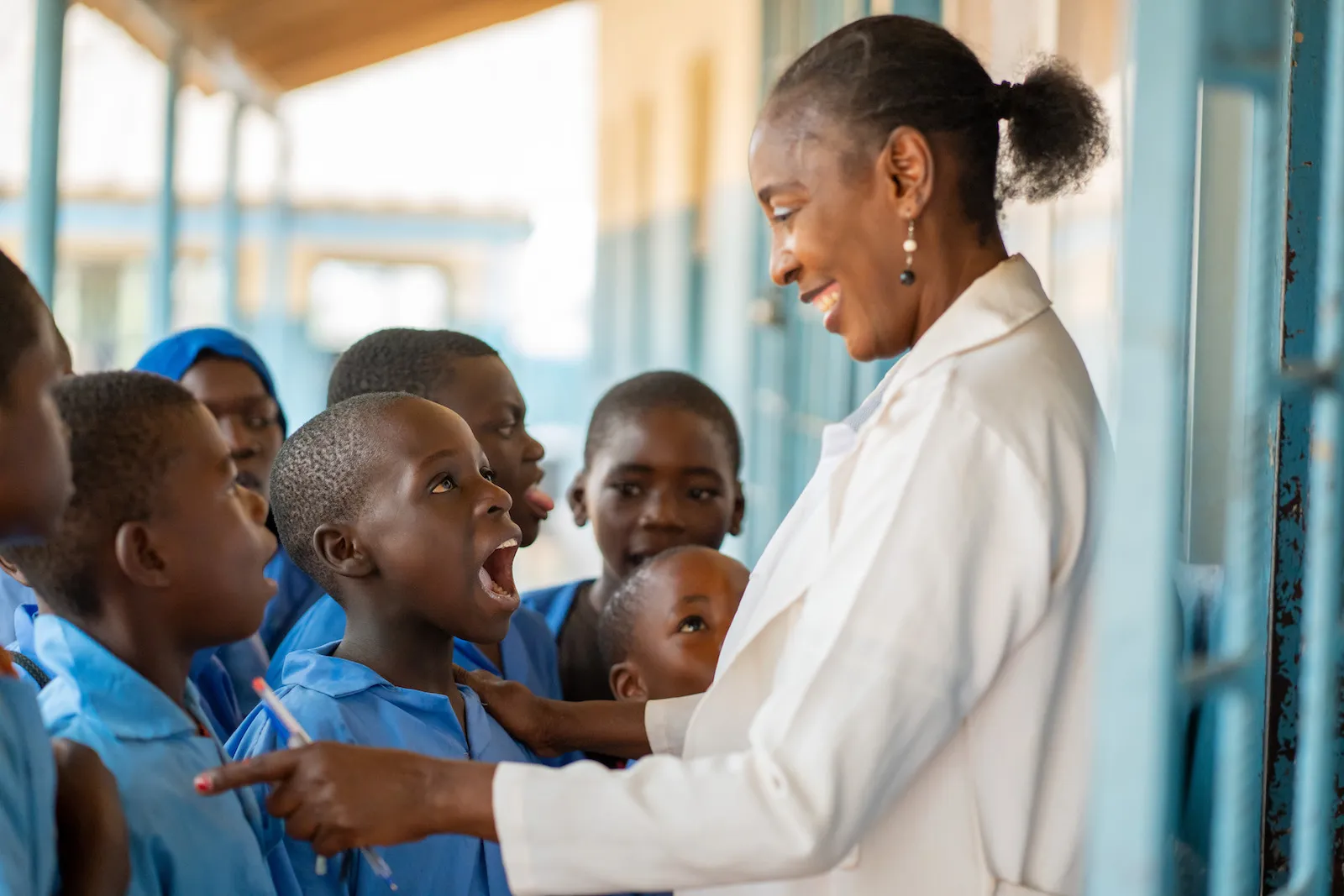
While many health programs focus on early childhood, the health needs of older children, from the time they are five years old, often go overlooked. Schoolchildren have the fewest touch points with the healthcare system of any age group, yet face serious health challenges; for example, children aged 5 to 17 experience the highest prevalence of malaria. To help bridge the gap between schooling and health, the Zambian nonprofit Healthy Learners works with the Ministries of Health and Education to create a system that enables kids to receive the care they need, where and when they need it: at their school. Healthy Learners' School Health Program trains teachers as school health workers (SHWs) and connects children to care. SHWs deliver health education in classrooms, use a clinical decision support system to assess students and make preliminary diagnoses, provide preventative care (such as deworming medication and vitamin supplementation). They even treat mild conditions in Healthy Learners' specially-constructed school health rooms, and make fast-track referrals to local clinics where students receive priority care. With support from the DIV Fund and the London School of Economics, Healthy Learners is conducting a cluster randomized controlled trial from 2023 to 2027 to evaluate the School Health Program's impact on health and education outcomes across 347 schools, comparing comprehensive school health services against enhanced deworming support and a control group. Led by the London School of Economics, University of Virginia, and University of Zambia, the trial results will inform the continued scaling of the program, potential long-term Government of Zambia funding, and expansion to other countries.
Other Projects
Explore more projects from the DIV Fund
.webp)