.svg)
PayDash: Improving Last-Mile Access to Information on Social Program Delivery
Project Description
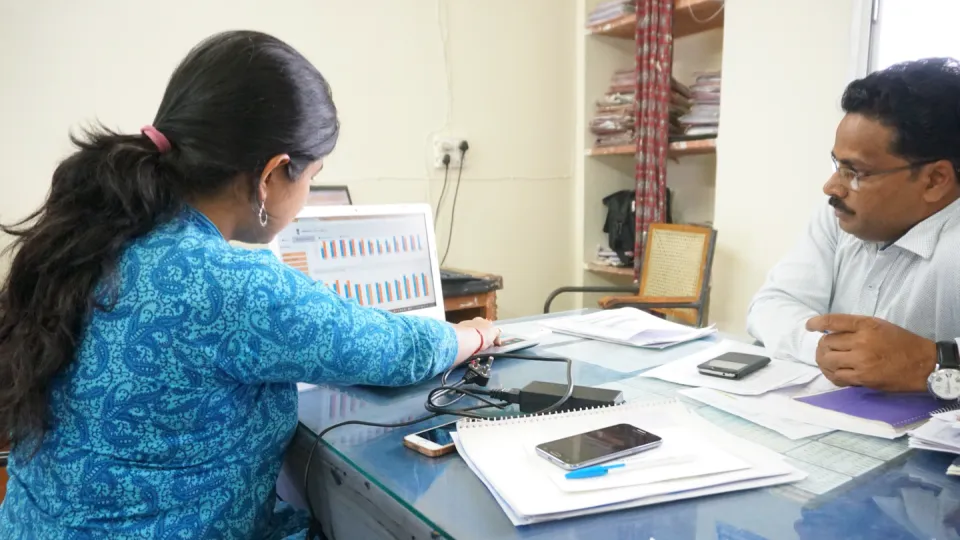
India's Mahatma Gandhi National Rural Employment Guarantee Act (MGNREGA) has been a critical safety net, providing rural households up to 100 days of paid manual labor annually. In 2019-2020, more than 50 million households participated in MGNREGA with a 45 percent increase in program participation during the COVID-19 pandemic. When it functioned best, MGNREGA stimulated economic activity and provided employment during agricultural downturns. However, workers waited an average of 53 days, and as many as 160 days, to receive payments, making it difficult to align income with expenses and incur debt. Delays also incentivized exploitation of marginalized people as local leaders would "front" payments to MGNREGA workers awaiting their wages, only to take a disproportionately large share in return once wages arrived. To better track payment processing through the bureaucracy, Government of India officials partnered with researchers from Yale University and software programmers to develop a data dashboard called PayDash. PayDash is a free and user-friendly tool that tracks payment processing and approvals throughout the bureaucratic chain, making key information more accessible, clear, and actionable so government officials can immediately find the cause of and address delays. An initial randomized controlled trial (RCT) in Madhya Pradesh and Jharkhand showed that the use of PayDash among bureaucrats significantly reduced delays for MGNREGA's 7.7 million workers. With support from the DIV Fund, Yale is completing an additional RCT in Bihar that will provide critical evidence on how PayDash can be deployed most effectively, updating the PayDash platform, and training government officials and technology staff to use and maintain PayDash. With consistent benefits shown through RCTs across multiple states, and with support from national-level policy makers, PayDash “smart-payment” features are now being incorporated into new public-sector citizen-centric mobile applications. The PayDash module has successfully been nested within two public-sector-owned applications projected to reach millions of users and impact tens of millions of beneficiaries. In partnership with the Ministry, ongoing efforts are focused on amplifying the reach and effectiveness of these applications during a critical policy transition, with the potential to further expedite social protection payments for up to 86 million households annually.
Other Projects
Explore more projects from the DIV Fund
.webp)