.svg)
Testing the Soil Method to Sustainably Manage Fall Armyworm
Project Description
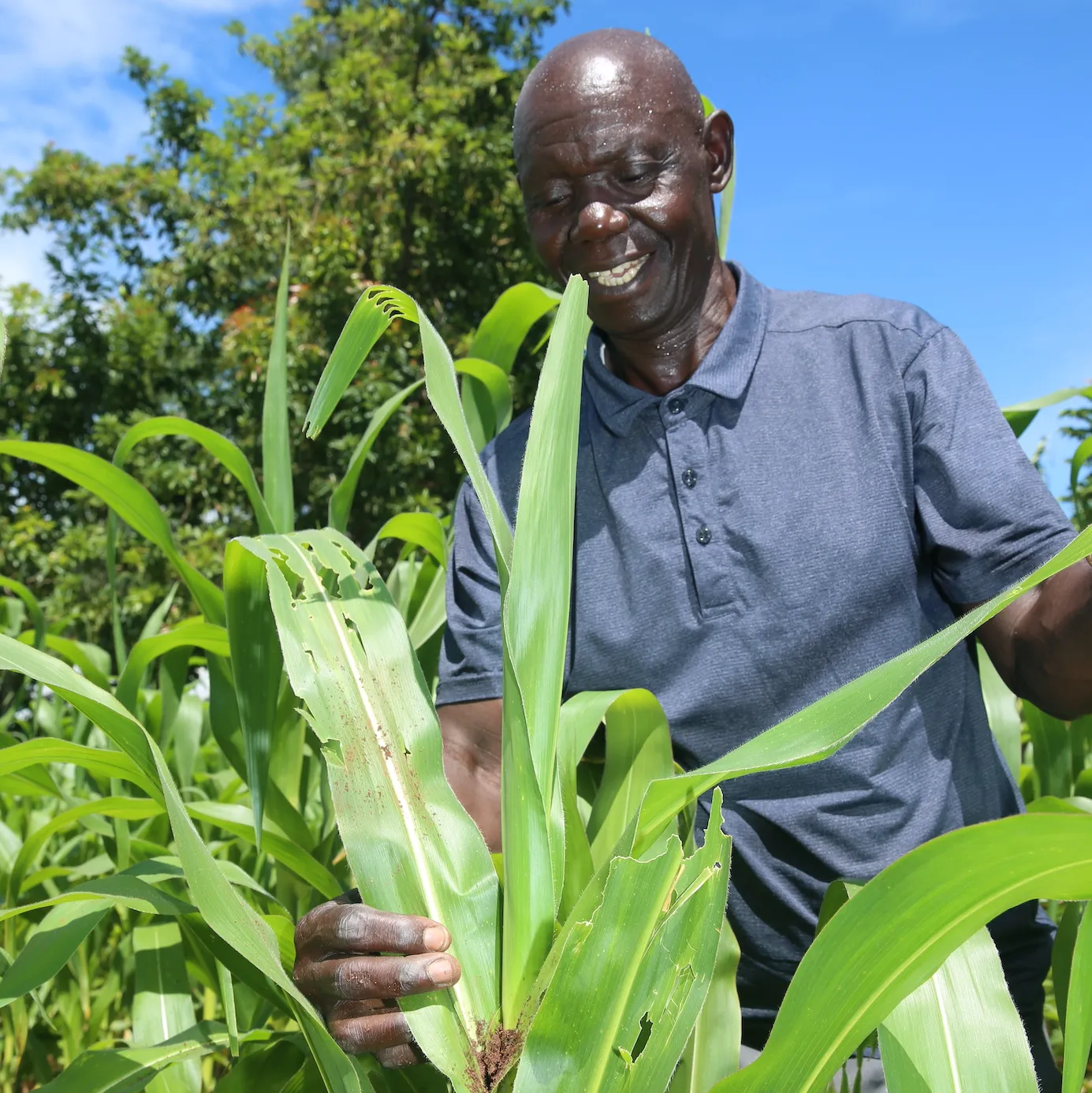
Known for its ability to damage and destroy a wide variety of crops, the invasive fall armyworm pest is very difficult to manage. Smallholder farmers in Kenya have lost as much as 47 percent of their maize crops to fall armyworm infestations in a single season, putting their food security and income at serious risk. Despite the scale and impact of fall armyworm on staple crops, typical mitigation strategies - such as pesticides - are unproven or difficult for smallholder farmers to adopt due to cost and lack of skills. To make effective fall armyworm control accessible, Farm Input Promotions-Africa (FIPS-Africa), a Kenyan social enterprise, is rigorously testing a low-cost preventative measure known as the soil method. Based on traditional farmer knowledge, the soil method is a simple agroecological intervention that requires farmers to place soil onto the whorl (new leaf growth) of a maize plant when the plant is vulnerable to fall armyworm infestation. This method has been used in different parts of the world, but it has not been validated through rigorous studies. With support from the DIV Fund and other partners, FIPS will conduct trials in both greenhouse and field settings to determine whether the soil method reduces fall armyworm damage to maize crops and to assess Kenyan farmers' perceptions of the approach. If found effective, results from the two studies will inform future research on how best to promote wide-scale adoption.
Other Projects
Explore more projects from the DIV Fund

.webp)